Pediatric Dental Crowns at The ToothZone Network
Restoring Your Child’s Baby Tooth
When a child’s tooth has a large cavity, a fracture, or has come through weaker than expected, a filling isn’t always enough to protect it. That’s where pediatric dental crowns come in. At The ToothZone Network, we use pediatric dental crowns to restore damaged teeth, protect them from further decay, and help kids keep chewing, smiling, and talking comfortably while their permanent teeth develop underneath.
What Are Pediatric Dental Crowns?
Pediatric dental crowns are small, custom-fitted caps placed over a baby tooth (or occasionally a young permanent tooth) that has been significantly damaged by decay, trauma, or a developmental defect. Unlike a filling, which repairs part of a tooth, a crown covers the entire visible portion, giving it strength and protection on all sides.
Baby teeth might seem temporary, but they play an important role in your child’s development. They hold space for permanent teeth, support proper chewing and speech, and contribute to a healthy bite. When a baby tooth is too damaged for a simple filling, pediatric dental crowns often become the best way to preserve that tooth until it’s ready to fall out naturally.
When Are Pediatric Dental Crowns Recommended?
Our pediatric dentists may recommend a crown in situations such as:
- Large cavities: When decay is too extensive for a standard filling to hold up.
- Cracked or fractured teeth: Often from a fall, sports injury, or biting down on something hard.
- Teeth that have had root canal treatment: These teeth tend to be more brittle and need extra protection.
- Developmental enamel defects: Some children are born with weaker enamel that wears down or chips more easily.
- High-risk patients: Kids who are more prone to cavities may benefit from a crown that fully seals off the tooth from future decay.
Types of Pediatric Dental Crowns
We offer a few different options depending on the tooth’s location and your child’s needs:
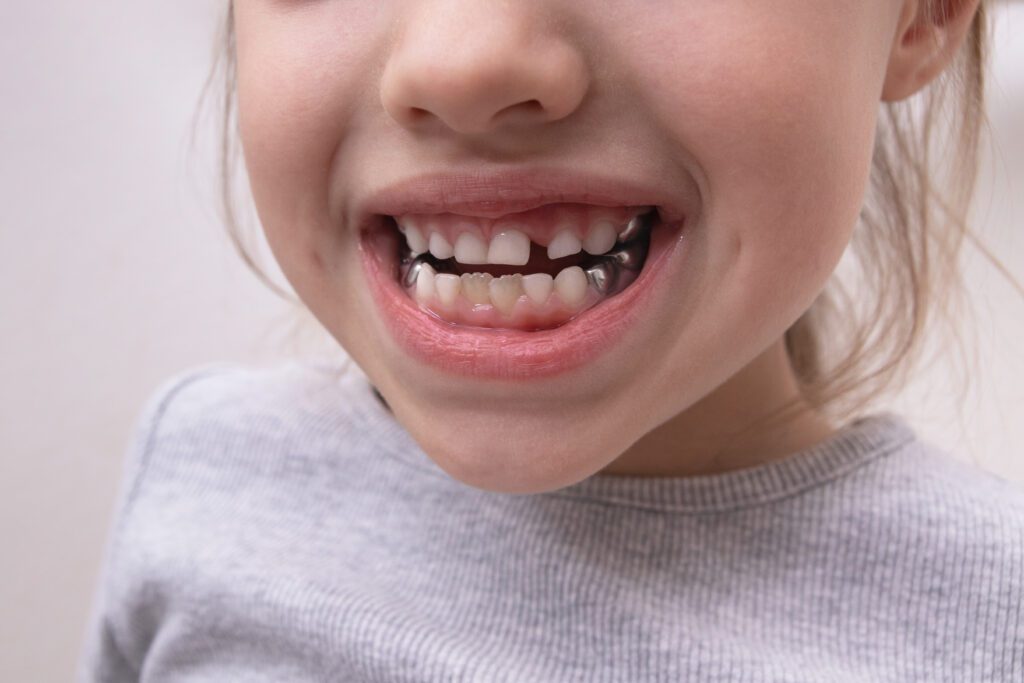
- Stainless steel crowns: Durable, cost-effective, and often used for back teeth (molars) that handle heavy chewing pressure.
- Zirconia or tooth-colored crowns: A great choice for front teeth, since they blend in naturally with the rest of the smile.
- Composite strip crowns: A tooth-colored option applied directly to the tooth, often used for younger children’s front teeth.
The Treatment Process
Getting a crown is typically a straightforward, single-visit procedure. Here’s what to expect:
- Exam and preparation: The dentist gently removes any decay and shapes the tooth slightly to make room for the crown.
- Fitting: The crown is selected or custom-shaped to fit your child’s tooth precisely.
- Placement: The crown is cemented into place, and the bite is checked to make sure it feels comfortable.
- Aftercare: Most kids adjust to their new crown within a day or two, with little to no discomfort.
We know that dental procedures can feel intimidating for young patients, so our team takes extra time to explain each step in kid-friendly language and offers comfort options, including nitrous oxide, for children who need a little extra help staying relaxed.
Why Families Choose Us for Pediatric Dental Crowns
Whether you’re looking for a dentist Fort Collins families already trust or a dentist Loveland parents recommend to their friends, our team has the training and experience to make pediatric dental crowns a smooth, low-stress process. We treat every child as an individual, adjusting our pace and approach based on their comfort level and needs.
Our dentist Fort Collins office and our Loveland location are both equipped with modern technology that allows us to diagnose issues early and plan the most conservative treatment possible. We would rather protect a tooth with a crown today than risk losing it to further decay tomorrow.
Frequently Asked Questions
Will my child’s crown fall out on its own?
Yes, if the crown is on a baby tooth, it will come out naturally along with the tooth when it’s ready to be replaced by the permanent tooth underneath.
Does getting a crown hurt?
No. We use local anesthesia to keep your child comfortable during the procedure, and most kids report little to no discomfort afterward.
How long does a pediatric crown last?
Crowns are built to last until the baby tooth naturally falls out, which can be anywhere from a few months to several years depending on your child’s age.
Can my child eat normally after getting a crown?
Yes, once any numbness wears off, your child can eat and drink as usual. We may suggest softer foods for the rest of the day just to be safe.
Ready to Protect Your Child’s Smile?
If your child has a damaged or decayed tooth, pediatric dental crowns can help restore their smile and prevent bigger problems down the road. Our team at The Toothzone Network is here to walk you and your child through every step with patience and care. Contact us today to schedule an appointment at our Loveland or Fort Collins office and learn more about how we can protect your child’s growing smile.